
Getting Nash County Court Records
One office holds the paper. The Nash County Clerk of Superior Court keeps the files. It serves both Superior Court and District Court. Start in Portal to find the case and read the public Case Summary. Then turn to the clerk-office terminal, the counter, or the paper file for the county record itself. A quick phone call can settle a lot before you drive over or mail a request. Ask about copy type, availability, price, and delivery. One limit matters here: Portal cannot certify anything. Only the clerk can put a seal on the official record.
- Find the case number or full caption in Portal or at a Nash County clerk-office terminal.
- Choose the needed item: Case Summary, plain filed-document copy, certified copy, or transcript.
- Call the clerk at (252) 220-3000 to confirm availability, cost, payment, and pickup or mail instructions.
- Inspect or request the Nash County file through the courthouse clerk and pay any approved charge.
- Use the county clerk, rather than Portal, when a certification under seal is required.
Mail questions go to PO Box 759, Nashville, NC 27856. The clerk publishes no certified-copy form, turnaround estimate, email, or fax, so ask the office directly for those details.
Nash County Clerk Court Files
Nash County runs on one unified Clerk of Superior Court. There is no separate county and district docket clerk here. That single office maintains the files, dockets, and indexes for both trial divisions. It can also certify court documents. One caution from the NCAOC stands out. The state agency is not the custodian of all court documents. A request to a state office is not the answer. It will never stand in for a proper Nash County case-file request.
Nash County Clerk of Superior Court
234 W. Washington St.
Nashville, NC 27856
(252) 220-3000
Regular courthouse hours include a midday closure. Check the schedule before you travel to the records counter. The unified Nash County clerk holds every category of file: Superior Court, District Court, special proceedings, estates, family, and magistrate cases. No separate elected magistrate docket clerk exists here. That structure is a real help. A request may touch a lower-level matter, and you cannot tell which office would hold it. For a case-file question or a certified copy alike, one rule holds. The Nash County clerk is the right first contact.
Note: Confirm the Nash County counter schedule before travel. The official courthouse hours include a midday closure.
Court Record Types
A Nash County court record is not one uniform document. The Portal Case Summary gives a public view. It covers case information, events, hearings, dispositions, and any applicable financial information. The clerk's file is deeper. It holds public pleadings, orders, judgments, and other filed items. Some of it may appear online when it is public and available. The rest takes a clerk-file inspection or a copy request.
- Case Summary or Register of Actions, the public event history.
- Filed pleadings, motions, orders, judgments, and other case-file documents.
- Hearing and disposition information for the Nash County case.
- Certified copies issued by the Nash County Clerk under seal.
- Transcripts or recordings, which follow separate request channels.
State the record type before the clerk starts a search. A docket entry can locate a document for you, but it is not automatically the document itself. For the mechanics, the state court-records guidance walks through terminal access, paper files, copies, and transcript routes for any Nash County request.
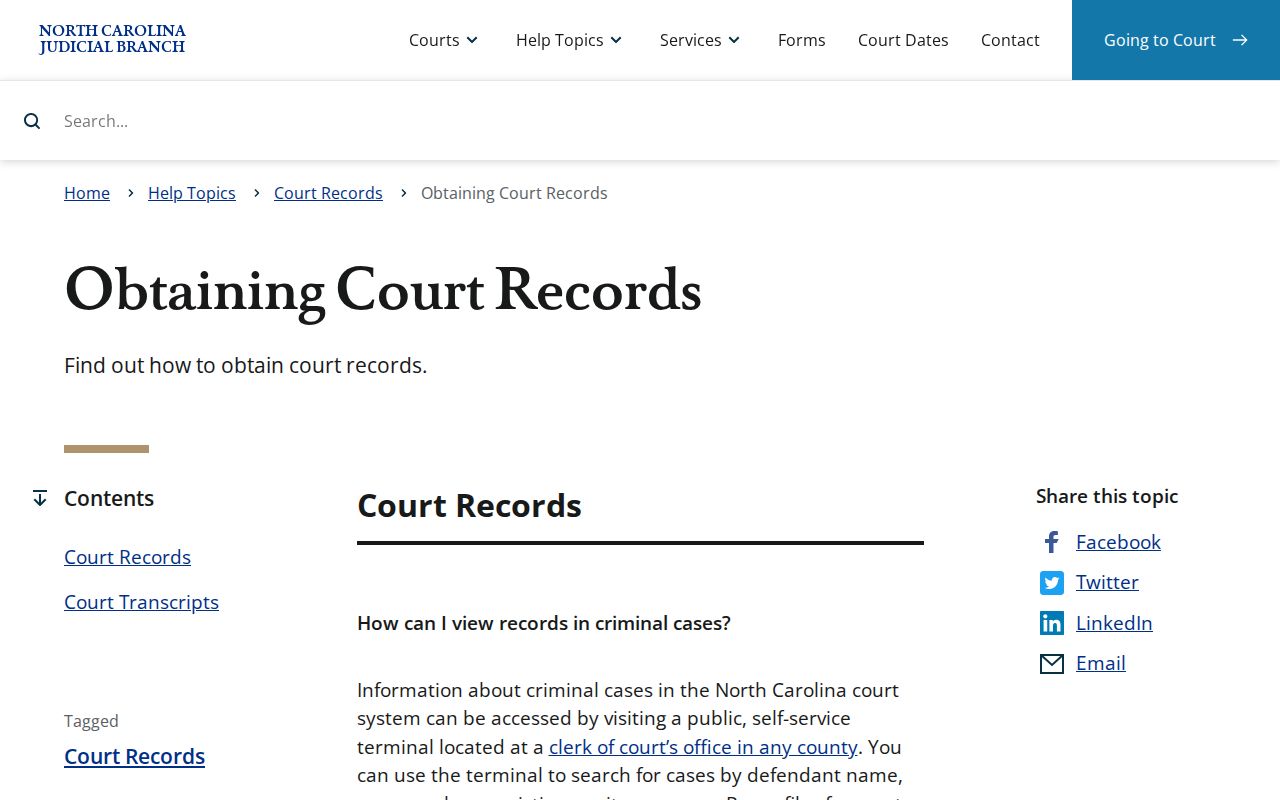
That official guidance supports using the Nash County clerk for the actual county file.
Nash County Record Copy Choices
Sort out three items before you order. A docket or Case Summary tracks the case. A filed document is an order, pleading, judgment, exhibit, or other item sitting in the official file. A certified copy is different again: the Nash County Clerk seals it as true to the original. Name the item precisely. The clerk can tell you whether it exists and what it costs.
| Item | What it does | Custodian or route |
|---|---|---|
| Case Summary | Shows events, hearings, disposition, and selected case information. | Portal or clerk-office terminal. |
| Filed document | Supplies the underlying pleading, order, judgment, or exhibit when public. | Nash County Clerk file and copy process. |
| Certified copy | Confirms a copy under the clerk’s seal. | Nash County Clerk. |
Inside a Nash County Court Record
Think of the public Case Summary as a map to the Nash County file. It opens with the case number and Case Information. It may then list assignment, parties, causes of action, events, hearings, disposition, and financial information. Do not read too much into an event, though. Its presence does not guarantee that the filed document is public or downloadable. Restricted, sealed, or juvenile material follows its own access rule.
| Case Information | Case-level identifying information in the public Nash County summary. |
|---|---|
| Assignment Information | The court or judicial assignment information. |
| Party Information | The party-role information used to distinguish similar cases. |
| Case Events | The chronological docket timeline. |
| Filed document | The actual court-file item, available only if public and accessible. |
| Certification | The clerk’s seal and certification on a true copy. |
Note: A Nash County Case Summary may locate a filed document. The docket event itself is not automatically the underlying document.
Nash County Public Terminal Research
A Nash County Portal session can leave your question unanswered. Try a public self-service terminal at a clerk office. State guidance says the terminals search criminal cases, and you can search by defendant name, case number, victim, or witness name. They also reach civil, special-proceeding, and estate information. The terminal count, its location in the building, and any staff-assistance policy vary. Do not assume them. Call the clerk ahead of any records visit, especially for older, unclear, or Portal-invisible material. The terminal is a search fallback only. The clerk file remains the official Nash County record route. An inspection there can confirm whether a public document is available for copying.
Fees and Certified Copies
North Carolina statutes set the copy and certification charges for a Nash County clerk request. They are not a local quote sheet. A certificate under seal costs $3, separate from any copy preparation. An exemplification carries a $10 statutory fee. No published Nash County total exists for a particular document. Confirm the full charge before you order.
| Item | Amount | Source note |
|---|---|---|
| Certificate under seal | $3.00 | G.S. 7A-308(a)(9), plus applicable copy preparation. |
| Exemplification | $10.00 | G.S. 7A-308(a)(10), plus applicable copy preparation. |
| First prepared page of each document | $2.00 | G.S. 7A-308(a)(12). |
| Each additional prepared page | $0.25 | G.S. 7A-308(a)(12). |
| Certified single-county criminal name search | $25.00 | AOC-CR-314; not a particular docket-copy request. |
Nash County Copy Fee Details
Fee amounts for certificates, exemplifications, and clerk-prepared copies come straight from the G.S. 7A-308 source, which sets the authority for those charges. The $0.25 figure is different. It comes from NCAOC public-record copy policy and applies to agency records, not to a court-file copy from the Nash County clerk. So a proper request names the exact Nash County document and simply asks the clerk which preparation and certification charges stack together.
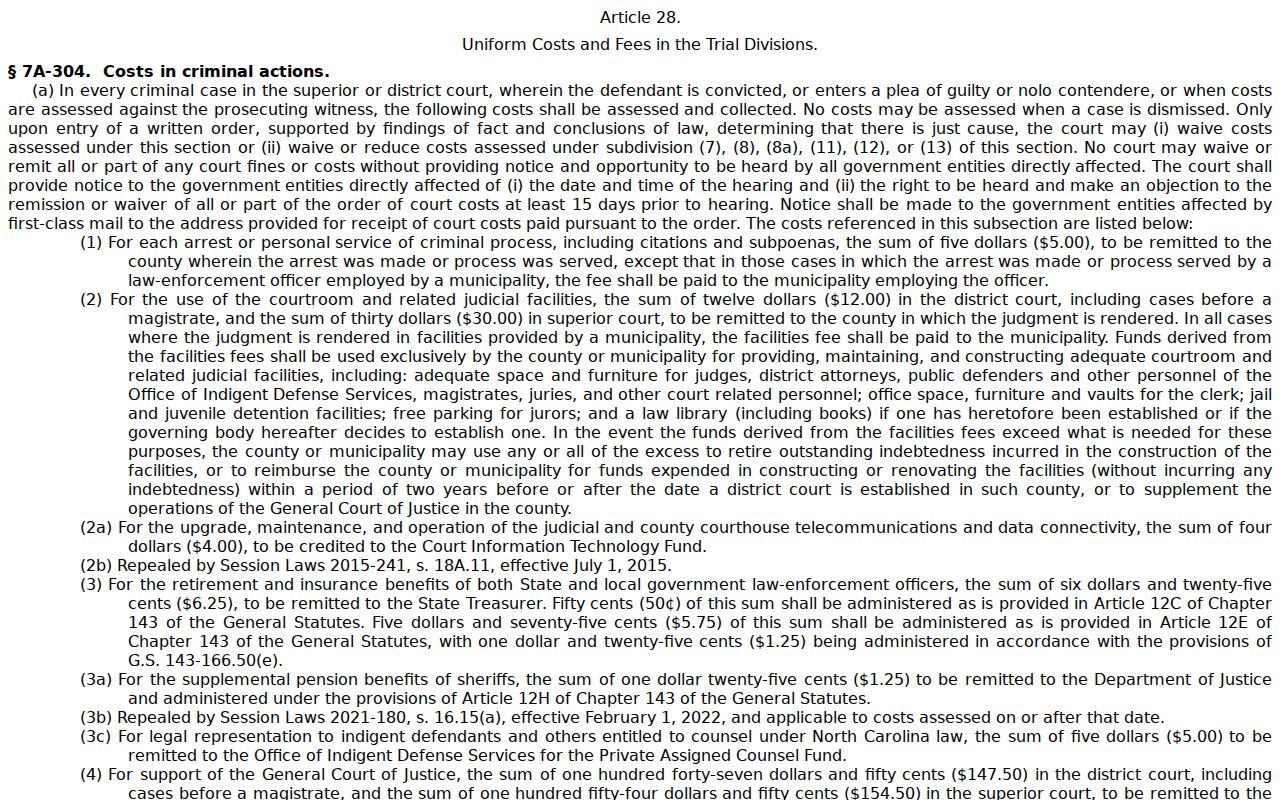
Treat those statutory references as a floor. They are not a flat price for every Nash County record. The numbers vary with the document and the certification it needs. The Nash County clerk can quote the cost for the record you actually named. Ask for the combined copy and certificate figure.
Note: Known statutory fee entries never replace a Nash County clerk quote for the particular document requested.
Nash County Payment Confirmation
The Nash payment information page covers court costs and eligible citations. It is not a copy-order form for court records. By mail, use a money order or certified check. Make it payable to Nash County Clerk of Superior Court. Cash and personal checks should never go in the envelope. Pay in person. You get more choices: cash, card with a processing fee, money order, or certified check.
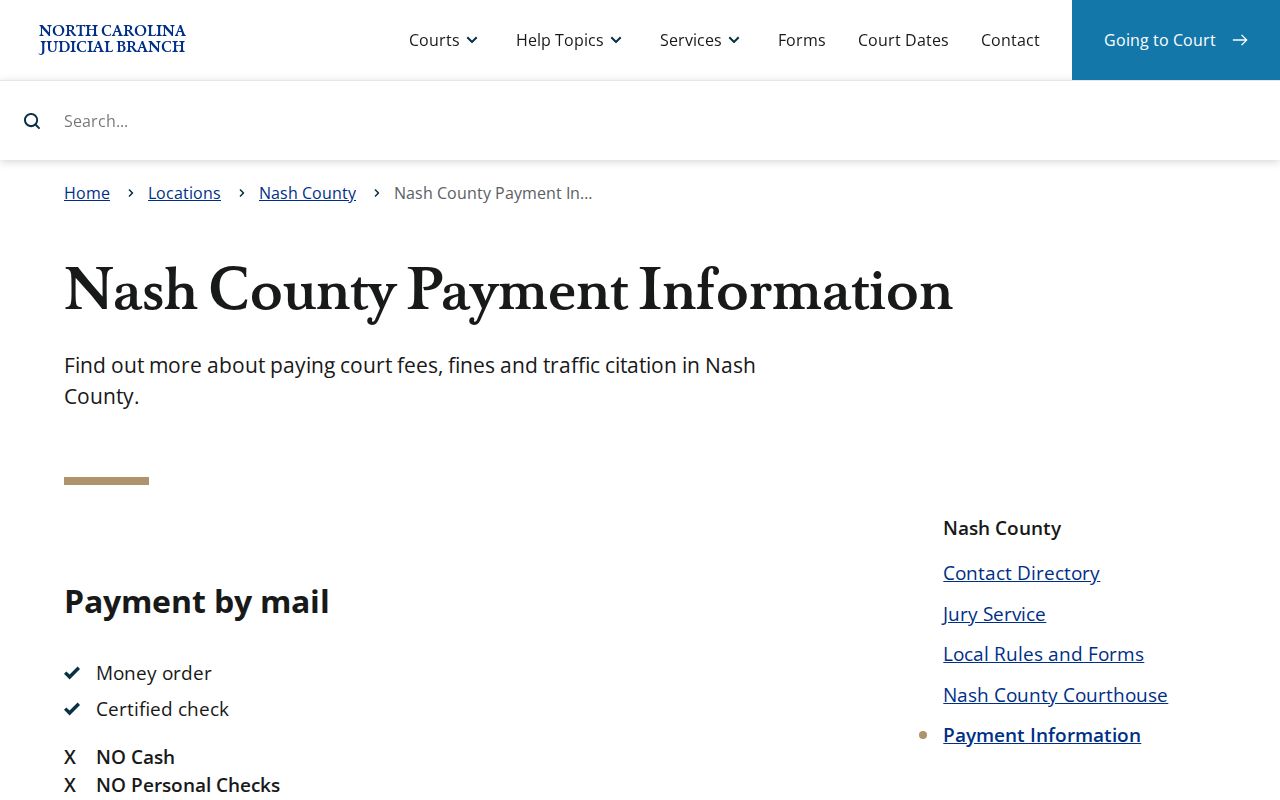
That page sets no rules for records orders. So ask the Nash County clerk whether a listed payment method works for your particular copy request.
Sealed Records and Public Access
Open access is the default under G.S. 7A-109. Clerks must keep records, files, dockets, and indexes available for public inspection during regular office hours unless a law says otherwise. Nash County is no exception, but openness has limits. Juvenile files, expunction files, sealed matters, and other restricted material stay off limits even when a related case entry shows up on the docket.
North Carolina court-record rules:
G.S. 7A-109 requires clerk-maintained records and allows public inspection unless access is prohibited.
G.S. 132-1 provides the general public-record framework and minimal-cost policy.
G.S. 15A-151 makes expunction files confidential through narrow statutory channels.
G.S. 7B-3000 limits public inspection of juvenile records.
Portal can show eligible Nash County public information and documents. That power stops at restricted items. Portal never converts a sealed or confidential file into a public record. An expunction is not a Portal setting or a simple removal request, either. Current guidance says the clerk has no case record to provide after an expunction. Even the expunction order is disposed of with the file. A Nash County record may seem missing. Ask the Nash County clerk which access rule applies. A blank online result is not the answer itself.
Nash County Police Record Difference
A Nash County court record and a police report are two different files. The clerk holds the court docket and the case file. An incident report stays with the investigating law-enforcement agency. It may never become a court filing at all. That matters in Rocky Mount and other local places. A city office can hand you a police record. That does not make it a Nash County court-record custodian. The Rocky Mount departments page is city-government material, not a court docket source.
Need a case disposition or a certified court copy? Go back to the Nash County clerk channels.
Note: A police incident report and a Nash County court record sit with separate custodians and may carry different access limits.
Nash County Transcript Requests
A transcript is its own product, not a Case Summary or a filed paper. State guidance sends a requester to a court reporter, a transcriptionist, or the clerk if a recording exists. Rates and timing vary. Criminal District Court proceedings usually go unrecorded. Someone must order a recording. Ask the Nash County clerk which channel fits your specific proceeding. A docket entry is not a transcript. Federal bankruptcy records sit outside Nash County court files entirely. The Eastern District bankruptcy record page handles PACER and archived federal-file requests.
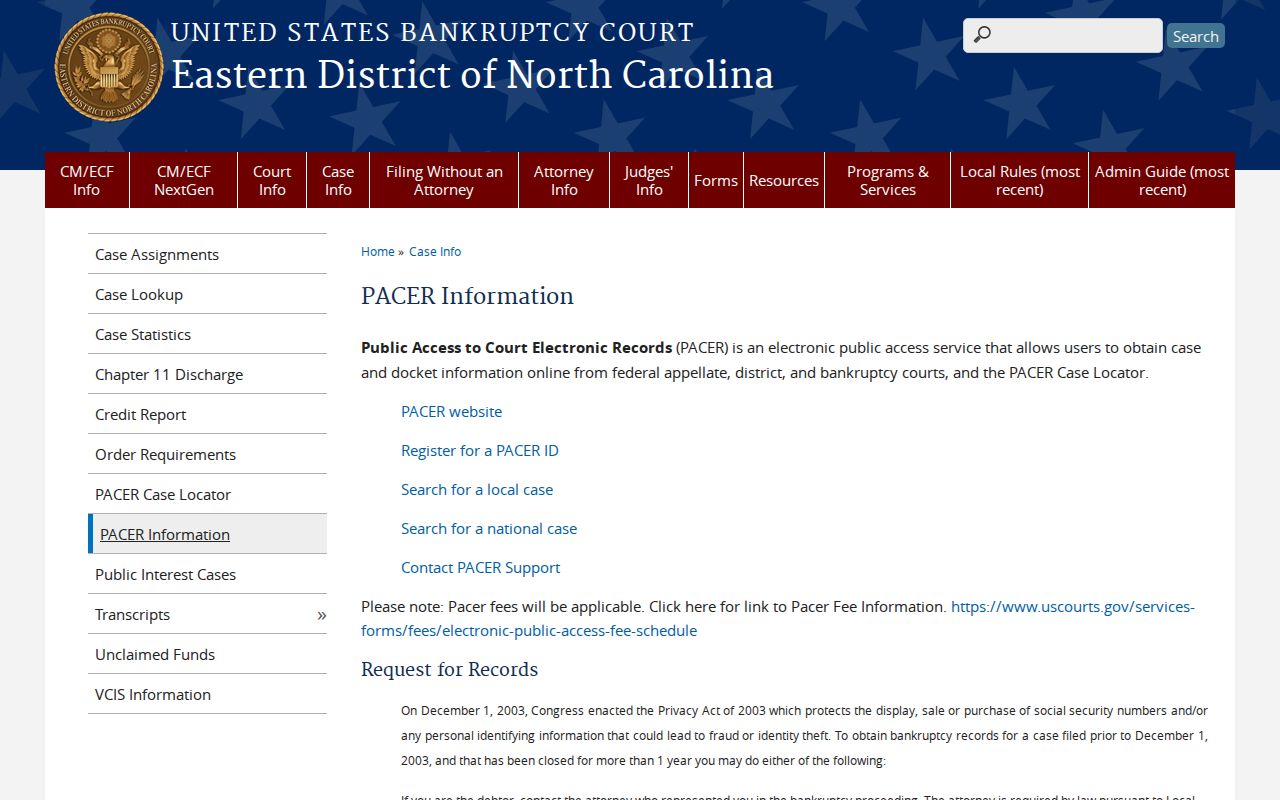
That federal path never substitutes for a Nash County request for a state-court copy or certification.
Nash County Court Cost Limits
Court costs and fines are one thing. A court-record copy charge is another. The state's court-cost guidance explains court costs and their payment consequences. The clerk-copy statute holds the preparation and certificate references. A Nash County requester should never infer a copy price from an amount due in a case.
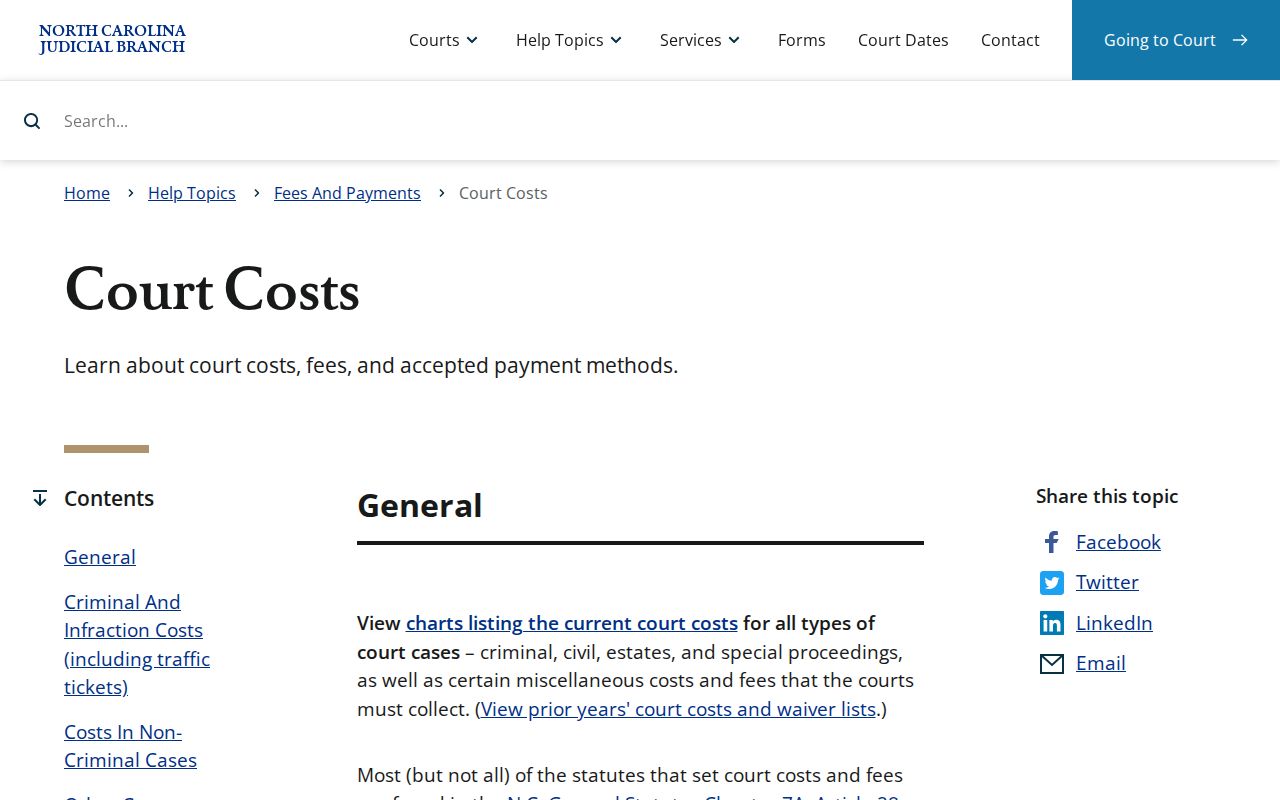
Ask the Nash County clerk to split the case obligation from the cost of the record you requested.